
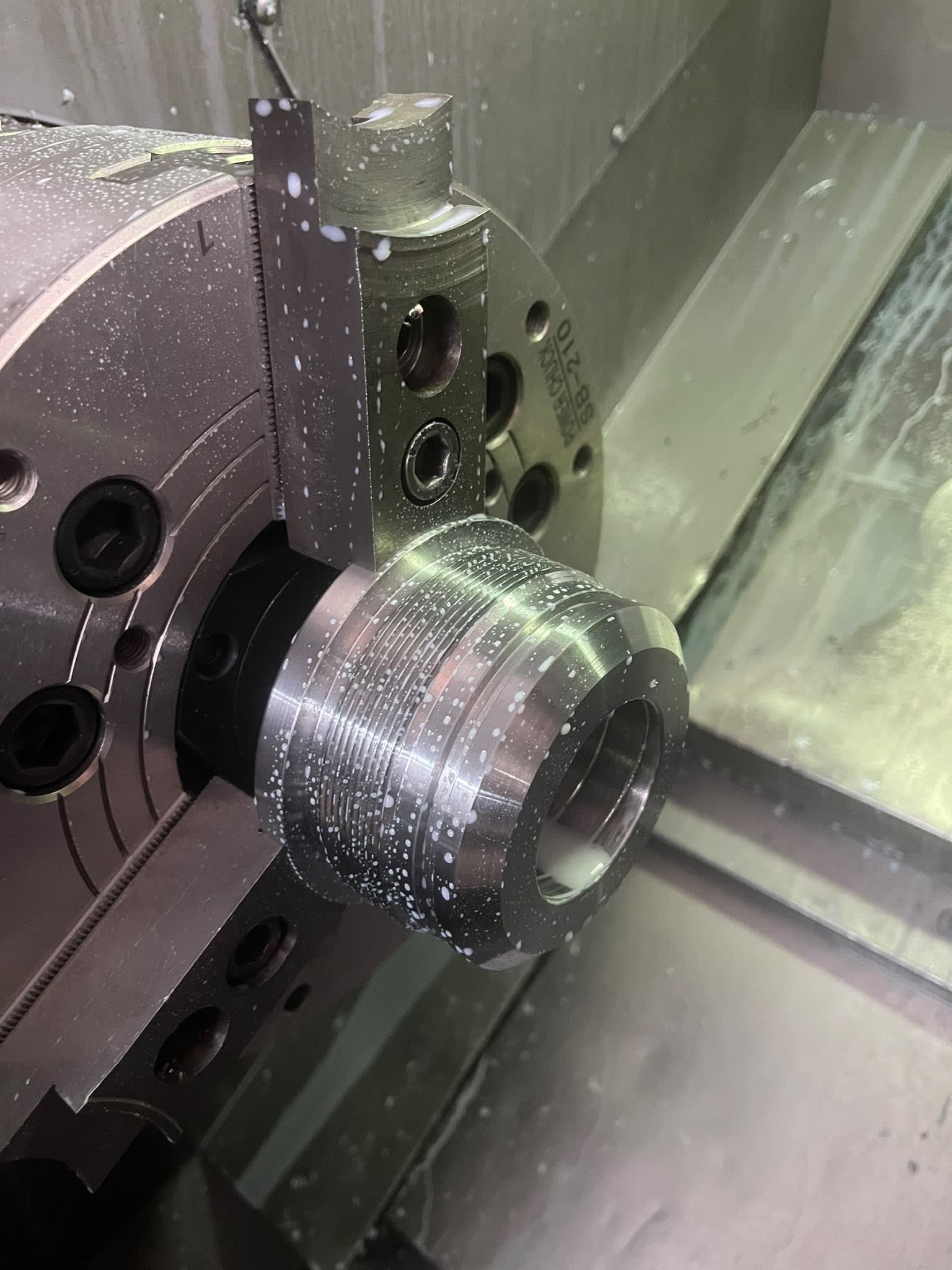
A CNC (Computer Numerical Control) lathe removes material while the part rotates in the chuck and the tool follows a programmed path. Shafts, bushings, flanges, sleeves, fittings and pins — anything with rotational symmetry — are turned. Once the program is written, the part repeats to the same dimensions over hundreds of pieces; that is what separates CNC from a manual lathe.
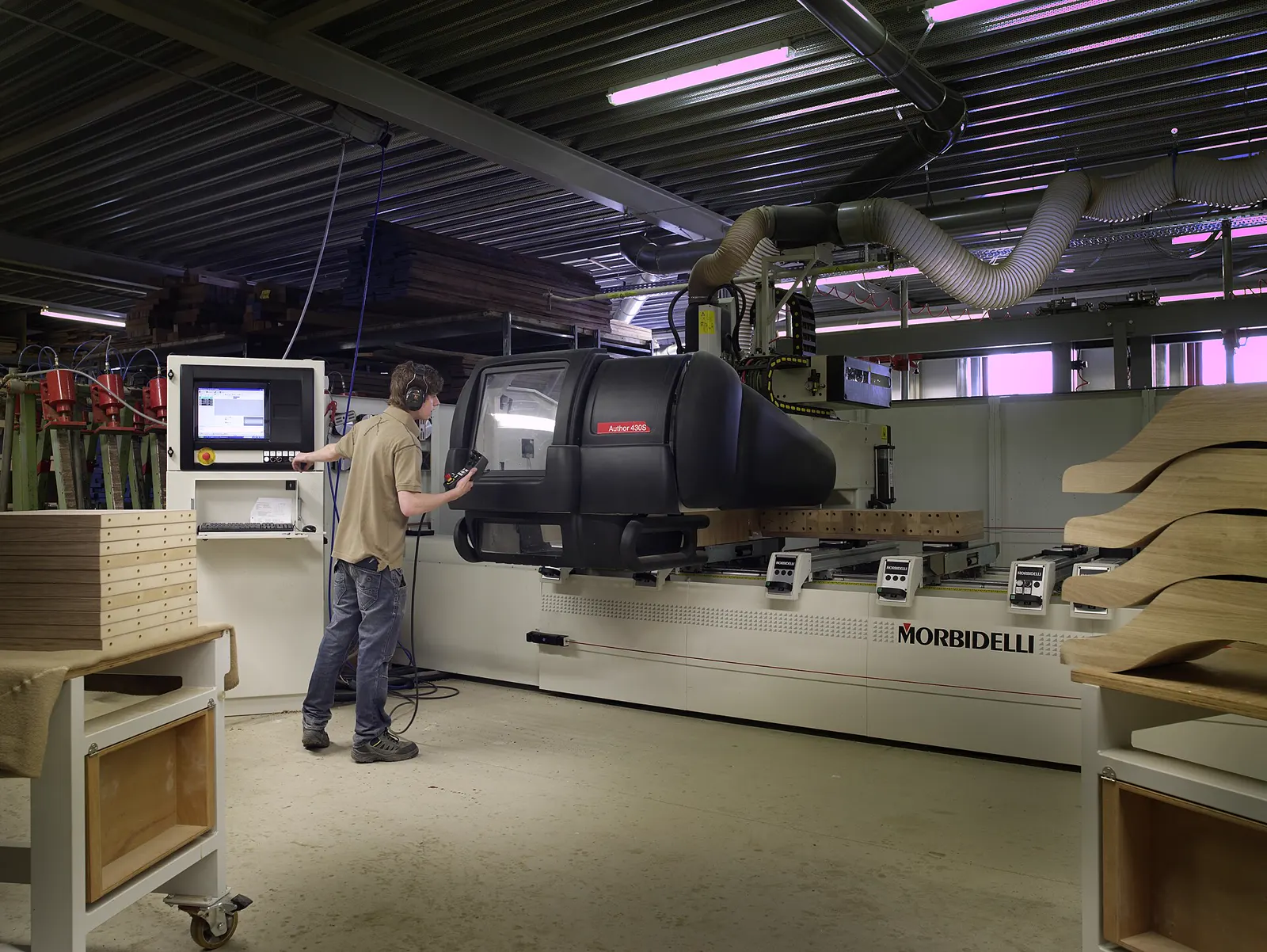
On a CNC mill it is the other way round: the part is clamped to the table and a rotating cutter (face mill, end mill) travels over it. Slots, pockets, flat faces, hole patterns and prismatic housings belong to the mill. A part with both cylindrical and prismatic features would classically need two machines and two setups.
A C-axis CNC lathe merges the two. The spindle locks at a given angle and driven tools in the turret drill, cut keyways and mill flats from the side and the face. The part never leaves the chuck, so there is no second setup, no tolerance drift and a shorter lead time.
Which machine for which part? Rule of thumb: if the part can be described by rotating it around its own axis, turning; if it is a square block, milling; if it is a mix, a C-axis lathe. Our shop in Silivri runs four CNC machines plus a mill, so all three cases are handled in-house — just send a drawing or a photo of the part.